
John William Aul
John William Aul served on the SS Steel Ore from September 42 to May 43, the SS Belgium Gulf from June 43 to Feb 44, the SS James R Randall from April 44 to January 45, the SS James W Cannon from January 45 to February 45 and again on the SS James R Randall from March 45 to September 45. John passed away 27 April 2001. You can contact his son, Tom Aul in Carnegie, Pa. You can email him at mistuhu@hotmail.com
Picture Below: John W. Aul
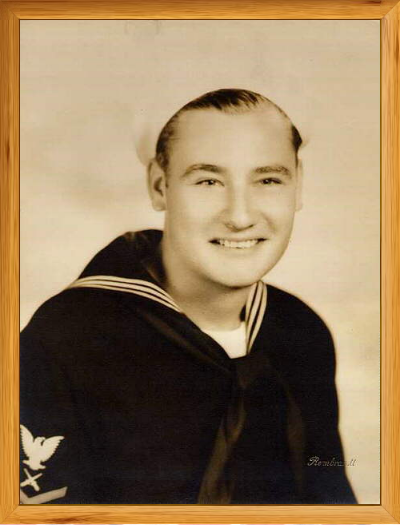
This is John’s story in his own words:
Date of entry into the U.S.Navy July 15 1942
Served five weeks in Boot camp at Quadington Point New Port,R.I. Naval
Training Station. First assigned to the U.S. Navy Armed Guard Center.
1st. Ave. and 52nd. St. Brooklyn,N.Y. Sent to the Armed Guard Gunnery
School Little Creek, Norfolk Va. After four weeks training sent back to
the Armed Guard Center for assignment on a Merchant Vessel. Sept. 23,
1942 Boarded the S.S. Steelore (20,500) ton) at Weehawkin,N.J. Ship’s
Captain Hector, Navy Ensign Basset later relieved by Lt. USNR Andrew
Dillman. Left the port of New York Sept.26, 1942. Arrived in the Port of
Spain Trinidad B.W.I. Returned to Weehawkin N.J. Second trip back to
Trinidad returned to Weehawkin N.J. Third trip down to Trinidad returned
to Weehawkin N.J. Fourth trip from Weehawkin N.J. to Jersey City N.J. to
Norfolk Va.(Cargo of coal) back to N.Y. harbor to join convoy to
Trinidad, docked at Guantanamo,Bay,Cuba (Submarine activity in area)
continued on to Trinidad,returned to Weehawkin N.J. Fifth trip to
Newport News Va. back to New York harbor to join convoy for Trinidad,
returned to Weehawkin N.J. Bauxite was the main cargo ,loaded at the
Shagaramus ore dock,Port of Spain,Trinidad. Detached from ship May 14
1943.
Assigned to the M.V. BELGIAN GULF (14,000 ton) oil tanker,Panamanian
registry,sailed under a Panamanian flag, built in Rotterdam,
Netherlands.Boarded ship June 10,1943 at Bayonne N.J. First trip left
Bayonne N.J. arrived in Liverpool,England to Birkenhead,Eng. returned to
Bayonne. Second trip left Bayonne, N.J. arrived in
Manchester,Eng.(wrecked bow of ship at Birkenhead repairs temporary at
Manchester for the return trip back,put into dry dock at Bayonnne, N.J.)
Third trip left Bayonne N.J. Arrived in Liverpool, Eng. to Manchester,
Eng. Returned to Philadelphia, Pa. to Chester, Pa. All trips to
Manchester were through the Manchester shipping canal. Fourth trip left
Chester, Pa. arrived in Liverpool, Eng. to Manchester, Eng. returned to
Bayonne. Fifth trip left Bayonne,N.J. Arrived Liverpool Eng. to
Manchester, Eng. to Birkenhead, Eng. returned to Bayonne,N.J.
Detached from ship January 19, 1944.(Cargo,crude oil,lubricating oil.
Assigned to the 5″38 Anti Aircraft Gunnery School Shelton, Va. February
12, 1944 finished school March 20 1944 Returned to Armed Guard Center
Brooklyn, N.Y.(Received orders to Escort a deserter back down to the
gunnery school at Shelton, Va.) Returned to the Armed Guard Shipping
pool at the Naval Operating Base Norfolk, Va. Assigned to the JAMES
R. RANDALL (10,000 ton). Ship’s Capt.Peters(later relieved by Capt.
Soren- Rasmunsen). Navy officer Lt.jg. J.H.Sullivan. Boarded ship Apr 6,
1944 at Norfolk,Va. Sailed for York to join convoy to Europe, arrived in
Liverpool, Eng., to Manchester, Eng. Went to Oban,Scot. (anchored in the
Firth of Lorn, two weeks waiting orders to ship over to the Normandy
coast of France.) Left Oban for Belfast,Ireland.to take on a cargo of
ammunition, bombs. Docked at Milford Haven,Wales to install smoke
screening device. Docked at Falsmouth, Eng. installed Barrage Balloon,
crossed English channel anchored at the Omaha beach-head Normandy,
France. Returned to Southampton, Eng.(converted ship into a Military
Transport MT 10) Took military personnel and their equipment to the Utah
beach-head. Crossed the English channel sixteen times to the beachheads,
two times up the Seine River to Rouen,France, once to LeHavre, returned
to Southampton. Detached from the Randall here in Southampton, exchanged
gun crews with the James W.Cannon that was tied along side of us. At 1
pm British time Jan 14, 1945, left Southampton Eng. for Cardiff, Wales,
then New York. (two days out into the Irish sea we encountered the worst
storm of all the crossings. Detached from the JAMES W. CANNON (ll,OOO
ton Victory Ship) named after the Cannon Towel Co. in New York.
Reassigned to the James R. Randall (one chance in the thousands of ships
available to get on again.) On this assignment I was put in charge of a
skeleton crew of nine men. Boarded ship again March 28, 1945 Went to
Philidelphia, Pa. sailed for Bristol, Eng. Went Through the Dover
Straits to Ghent, Belgium, returned to New York. Left N.Y. for Houston
Tex. (cargo of cotton ) sailed again to LeHavre,France, back to
Boulogne, France, back to N.Y. ENDING MY SEA DUTY SEPT 20 1945. Crossed
the Atlantic to Europe eight times, returned Eight times, crossed the
English Channel Sixteen times to the OMAHA AND UTAH Beach-heads on the
Normandy Coast of FRANCE. Sailed the Caribbean Sea five times to
Trinidad, B.W.I. Discharged at the Naval Operating Base in Philidelphia,
Pa, NOV. 2 1945
:
THE NIGHT BEFORE CHRISTMAS
ABOARD THE JAMES R. RANDALL
T’was the night before Christmas and all through the ship
The holiday spirit had taken a dip
Our stockings filthy from over long wear
Stood without hanging straight up in the air
And our G.I. long Johns would have done the same
Could we ever have gotten them off our frame
The Red Cross in hold #3 and G.I.’s in hold #4
Were hearlding Christmas with a discondant snore
When out on the deck there arose such a clatter
We jumped from our bunks and sprang for the ladder
The moon on remnants of C-Ration cans junk
Created a picture that glittered and stunk
And what to our wondering eyes should appear
But the beat up old boom and the dock still here
And we knew from the look of the warf we tied on
That it was’nt La France but Old Southamp-Ton
Then more rapid than seagulls new shipmates(rats)did appear
As we bellow with horror and quiver with fear
Some come from the fore deck and some from aft
And others on shore leave came in on a raft
From the top of the mast,from the depth of the hold
Came rodents came vermine came rats young and old
And then who should appear to help out in the fun
But old Sad-Sack Santa Pvt. Stevenson
You all want to know what is hid around his middle
So two stripes for the guy who can answer this riddle
CASE OF THE G.I.
I go to sleep in a G.I. bed
On a G.I. pillow I rest my head
My blankets they are G.I. too
Then G.I. sleep and think of you
A G.I. bugler wakes me up
I drink G.I. coffee in a G.I. cup
The powdered eggs are G.I. too
But G.I. wish I were with you
At night my G.I. prayers I’ ll say
We’ll have our G.I. peace some day
And when this darn war is through
This G.I. will return to you
Now G.I. stands for Government Issue
But my darling G.I.miss you
G.I. hope you miss me too
For Gi I love you, Gi I do.
In this year of 19 hundred and 45
It makes a fellow feel alive
To know that he is going home
To which I dedicate this poem
In April nineteen fourty-four
We sailed out of Norfolk’s door
Then two more days,don’t know the date
We stopped a while in New York State.
Two weeks,or something more of the sort
We hit a town called Ellesmere Port
We liked the place and the time was night
No guards were around,so into our plight
We all jumped ship caused a houmourous sight
Nothing would happen was our prediction
But no results one weeks restrictions
We traveled the canal and in through the locks
To a city named Manchester, at Salford docks
With wine ,whiskey,beer and gin
No such a town have you ever been in
If I had more time I certainly would write
Of the times we had at this very site
And then one morning to our utter dismay
We found we were leaving the very next day
From there up the old Mersey River we ran
To a firth in Ole’ Scotland on the shores of Oban
A prettier place now you never will see
But the bad with the good — no liberty
For nearly two weeks we had nothing to do
Just watching the scenery and singing the blues
Till one bright morning we heard the good news
Which heightened our spirits and chased away our blues
Then one evening in June-orders at last
We sailed out of the harbor and on to Belfast
They loaded us there with hot soup and stuff
And when they decided we had enough
WE whistled for tugs and without backward glance
We pulled up our anchor and high-tailed it for France
After one of the trips,the sixth I think
Our Captain got a little too much to drink
He brought, out his gun as the story goes
While the 1st Mate took hold of the nearest Fire hose
A sure enough battle did then ensue
To the utter enjoyment of the whole damn crew
The police came out but not before
The Skipper had shot up the Purser’s door
Our home port Southampton a town you should know
A place where we always would just come and go
The Pubs were just open from seven to ten
Then back to the ship we would wander again
And sometimes I think how awful it sounds
For a fellow to tell you that whiskey is five pounds
If you want my opinion but can’t ever tell
The only worse place than Southampton is hell
The trips to the beacheads are something to remember
WE started in June and wound up in December
Then one of our trips amid torrents of rain
We traveled the beautiful Rue de La Seine
If any asks you just what you were doing
You were wading through mud on the sidewalks of Rouen
Our last trip to France was to ancient Le Havre
Where cognac and colvadose were all free of charge
On this last trip was much yellin and shooting
Old Taylor he got out his old forty-five
And when he do that, watch out man-alive
He shot big Bill Burrel right through the belly
And his blood ran out like red raspberry jelly
They lowered Bill over and sent for the Doc.
And took Taylor away to start pounding rock
One day when we docked with mornings high tide
Along comes a ship and ties up to our side
Nothing else happened till the next day we heard
That our whole darn crew was being transferred
The happiest moment occoured when we abandoned
The James Rammin Randall for the James W. Cannon.
Now when you get home and start drinking the toasts
Remember the invasion of the French coast
The trip is now over and we’re all headed home
Even if this is one hell of a poem
Picture Below: Adams, Aul, Baker, Barrett, Barr, Dawson
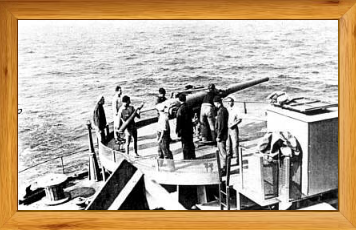
Picture Below: John Aul, Joe Splendori, John Barrett, Bob (Pop) Baker
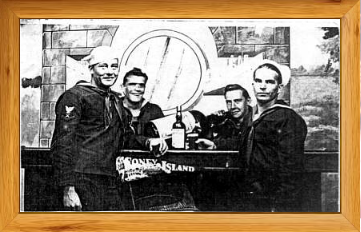
Picture Below: SS Steel Ore - Trinidad, B.W.I.

Picture Below: SS Steel Ore - Abandon Ship Drill
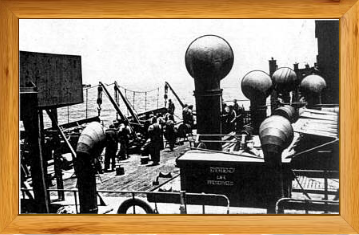
Picture Below: SS Steel Ore - Fire and Boat Drill
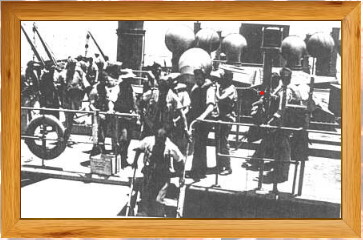
Picture Below: SS Steel Ore - 13,000 tons bauxite ore

Picture Below: Lt Dillman and girl in Trinidad

Picture Below: Lt Dillman and Native worker

Picture Below:Lt Dillman, Splendoria, with Queen Mary Orchid
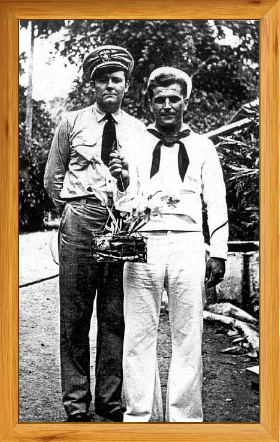
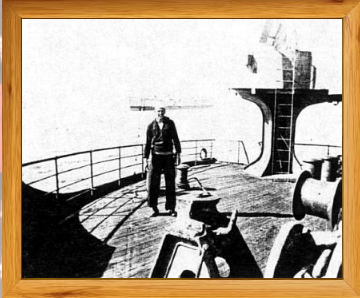
Picture Below: SS Belgium Gulf - Holtzner
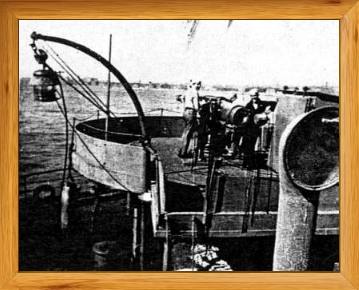
Picture Below: SS Belgium Gulf - Hennessey, Wise, and Holtzner
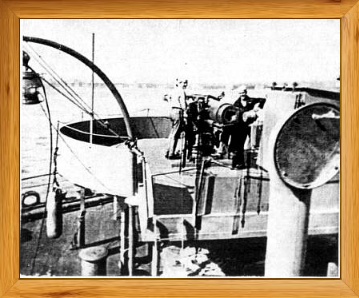
Picture Below:Hennessey, Wise and Holtzner
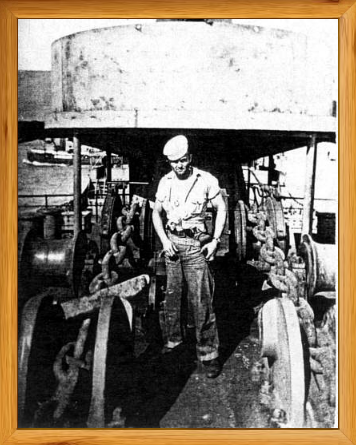
Picture Below: Wise
Picture Below: Top: Beaulier, Barbato, Barrett, Beseres, Adams, Dillman and Bottom: Barr, Dawson, Aul, Baker

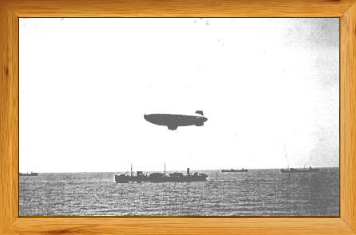
Picture Below: Convoy in Caribbean
Picture Below: SS Belgium Gulf - Holtzner, Wise and Hennessey

Picture Below: Hawes, Holtzner
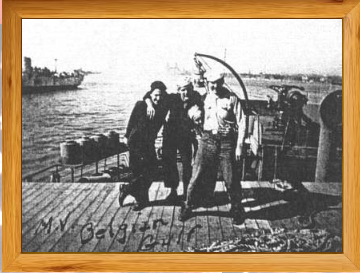
Picture Below: Wise, Hennessey
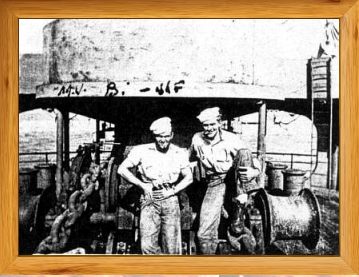
Picture Below: Hennessey, Wise

Picture Below: Belgium Gulf - 3"50 - Wise
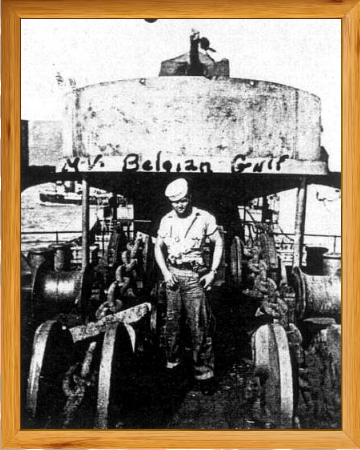
Picture Below: Holtzner and Hennessey in Liverpool, England

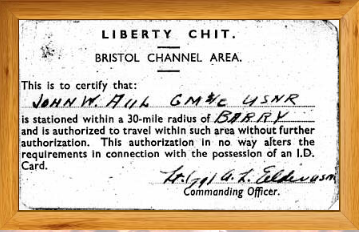
Picture Below: Barry, South Wales Pass
Picture Below: Article about Lt Dillman's surgery

Obituary: John W. Aul / Protector of U.S. shipping in WWII
Friday, April 27, 2001
By Jack Kelly, Post-Gazette National Bureau
John W. Aul, who survived eight trans-Atlantic crossings as a member of a
little known Navy unit during World War II, died Tuesday at the age of 80.
Mr. Aul, a Whitehall resident, had been battling lung cancer for more than
a year.
For many years a pipefitter at Westinghouse Atomic Power Laboratories, Mr. Aul
served with the Navy’s Armed Guard in World War II. The unit’s mission was to
protect the ships of the U.S. Merchant Marine from aircraft and submarines. The
ships were outfitted with defensive weapons, and Armed Guards manned the guns.
A native of Mount Oliver, Mr. Aul dropped out of school in the eighth grade and
went to work for the Civilian Conservation Corps, helping to rehabilitate a
national forest in Virginia that was suffering the effects of a widespread
chestnut blight.
He enlisted in the Navy on July 15, 1942. After attending gunnery school in
Norfolk, Va., he began his shipboard duties that September and served until
Sept. 20, 1945. In addition to his trans-Atlantic trips, he made five voyages
to the Caribbean and 16 trips across the English Channel to deliver troops and
equipment to the Omaha and Utah beachheads in Normandy.
Much of his service was in Liberty Ships, more than 2,700 of which were built
during WWII. Most were built in less than two months. They carried two-thirds of
all the cargo shipped from the United States during the war.
All cut from the same mold, Liberty Ships were 441 feet, 6 inches long, with a
beam of 56 feet 103/4 inches. A Liberty Ship could carry about 9,000 tons of
cargo or 500 troops.
A typical crew was that of the John Brown, one of two surviving Liberty Ships.
The Brown had a crew of 45 merchant seamen, with 41 Navy personnel to man
the guns. The John Brown now is a maritime museum anchored in Baltimore. A
volunteer crew conducts orientation cruises from various East Coast and Great
Lakes ports on occasion. Four of Mr. Aul’s sons accompanied him on one such
cruise from Erie last summer. It was the first time Mr. Aul had been on a
Liberty Ship since his discharge.
“Dad took us to the 5-inch gun in the stern,” his son Thomas recalled. “Manning
that gun had been his job during the war.”
The typical armament of a Liberty Ship was a 3-inch gun in the bow and a 5-inch
gun in the stern, and several anti-aircraft guns. The 3-inch gun and the
5-inch gun were used to fight off submarines if they surfaced to attack the
merchant vessels. More than 200 Liberty Ships were sunk during the war, but
Mr. Aul completed his service without experiencing combat. Mr. Aul’s closest
brush with death came during a violent storm in the Irish Sea in January 1945.
He also served aboard ore ships that brought bauxite from the Caribbean to the
United States, where it was used to manufacture aluminum for the frames of
fighters and bombers.
Mr. Aul is survived by his wife, Theresa; five sons, Raymond J. of Whitehall,
Thomas J. of Carnegie, Regis J. of Mt. Lebanon, Donald J. West View and Jack
J. of Baldwin; a daughter, Mary J. of Whitehall; a brother, George of
Brookline; 25 grandchildren; and one great-grandchild.
Mass will be celebrated at 11 a.m. today in St. Basil Church, 1735 Brownsville
Road.
Copyright 1997-2001 PG Publishing. All rights reserved.